

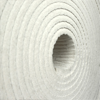
 Soft Felt
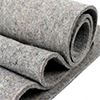 Medium Felt
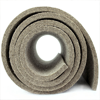 Firm Felt
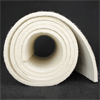 Extra Firm Felt
 Handicraft Felt
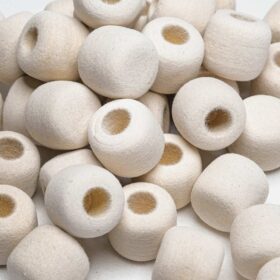 Polishing Felt
Terms used in the felt industry to describe felt:-
Black Felt, Blended Felt, Coloured Felt, Glass Felt, Grey Felt, Handicraft Felt, Hard Felt, Industrial Felt, Medium Felt, Mix Felt, Moth Proofed Felt, Natural Felt, Needled Felt, Non-woven Felt, Polishing Felt, Polyester Felt, Pressed Felt, Roll Felt, Sheet Felt, Soft Felt, Surgical Felt, Synthetic Felt, Technical Felt, Viscose Felt, White Felt, Woollen Felt.
Other than the terms, Needled Felt; Polyester Felt; Viscose Felt & Synthetic Felt; all the terms above describe a product manufactured either wholly or partly from sheep wool.
Pressed Felt is a non-woven material made from wool or wool blends by compression, heat, and moisture.
The specific properties of fibre interlocking are unique to wool.
The final structure is resilient and dimensionally stable and can be made into a wide range of thicknesses, textures, and densities, specific to its intended use.
The term, “Technical Felt” is pressed felt made to a specific formulation to carry out a particular engineering or technical function.

Key Properties of Pressed Felt
- A fibrous structure which can absorb and transmit fluids along capillary pathways and filter out solids or suspended liquids in gases (mists)
- A homogenous structure so that, if the surface is removed, it is replaced by a similar face without fraying or loss of properties.
- Resilience, ensuring excellent recovery of the material to its original dimensions after compression.
- High energy absorption, enabling large amounts of vibration or sound energy to be dissipated.
- Easily shaped by cutting or (in higher densities) machining, and dimensionally stable in use, neither swelling nor shrinking.
- Operational over a wide temperature range from -40 to + 100 Celsius.
- Good response to oxidation, ultraviolet exposure (ageing) and non-polar solvents.
- A near constant coefficient of friction in both wet and dry conditions.

Following blending the fibres are carded to remove tangling and laid evenly on a conveyor to form a batt or blanket of the required weight.
Wet steam is forced through this web, causing the wool fibres to swell and open the scales on their surface.
The wet web (batt or blanket) is then passed through a milling and hardening stage where the material is mechanically worked, causing the fibres to move against each other and progressively interlock. This is the “felting process”, and the more the fibres are worked the greater the density (hardness) becomes.
The hardness of the felt is determined in the milling stage and in general terms is proportional to density for any given blend, i.e.: the denser the felt the harder it feels. Following this stage, the final characteristics of the felt may be further modified by additional processing or treatments. Flame retardancy, rot resistance, dyeing and pre-shrinking can be applied to some felts specific to their final use.
The felt can be dried mechanically under tension in large batch ovens called stenters, or if the climate allows draped over large frames to naturally dry in the sun.
Normally the felt is supplied with a smooth finish usually referred to as a “pressed finish”. This can have some pile or short fibre lengths extending beyond the main surface of the material and one side may show some slight patterning caused by the hardening cloths used during the initial “felting process”. Harder felts where surface finish is critical can be further processed by grinding or sanding to provide a smoother surface specific to applications like inking rollers.
Softer felts are generally presented in rolls of varying lengths depending on the thickness, but very hard felts are always manufactured in smaller flat sheet formats.