

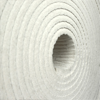
 Soft Felt
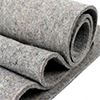 Medium Felt
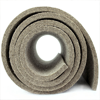 Firm Felt
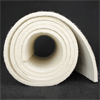 Extra Firm Felt
 Handicraft Felt
 Polishing Felt
Technical Guides
A Comprehensive Guide to Adhesive Lamination

Sep
Adhesive felt, foam, rubber & non-woven laminations, transform the base raw product into production-ready materials. By adding pressure-sensitive adhesive, these materials can be supplied as self-adhesive rolls, strips, gaskets, seals, pads and bespoke components that are easier to position and assemble.
However, specifying an adhesive-backed material involves more than choosing a “sticky backing”. The base material, bonding surface, operating environment, adhesive construction, release liner and finished format can all affect performance.
This guide explains how to specify adhesive-laminated materials, compares common adhesive constructions and outlines the information British Felt needs to assess a requirement accurately.
Before reading this guide please see our 2 other guides on
Choosing the right Felt material- A Complete Guide
Guide to Slitting and Conversion
In This Guide
- What Is Adhesive Lamination?
- Which Materials Can Be Laminated?
- How to Specify an Adhesive-Backed Material
- Transfer vs Tissue vs Scrim Adhesives
- One-Sided vs Two-Sided Lamination
- Why Release Liners Matter
- Lamination and Secondary Converting Processes
- Rolls, Coils, Sheets or Finished Components?
- Common Specification Mistakes
- Information Needed for Quotations
- Frequently Asked Questions
What Is Adhesive Lamination?
Adhesive lamination is the process of combining a flexible base material with a pressure-sensitive adhesive. A release liner normally protects the adhesive until the material is applied to its final surface.
|
Typical construction |
- The base material provides the functional properties, such as cushioning, sealing, protection, spacing or vibration control.
- The adhesive provides the attachment method.
- The release liner protects the adhesive during conversion, storage, transport and application.
Although the construction appears simple, reliable performance depends on these layers working together. Adhesive selection should therefore form part of the complete material specification, not be treated as a final addition.

Which Materials Can Be Laminated?
British Felt Co. can assess a range of flexible industrial materials for adhesive lamination, including suitable customer-supplied materials:
- Industrial wool felt
- Polyester felt
- Technical non-wovens
- Open-cell foam
- Closed-cell foam
- Sponge rubber
- Flexible textiles
- Other suitable flexible substrates
Felt and Non-Wovens
Industrial felt and technical non-wovens often have textured or porous surfaces. Material density, thickness, surface structure and flexibility should therefore be considered alongside the adhesive construction.
Foam Materials
Foams vary in density, compressibility, cell structure and surface characteristics. The adhesive must be considered in relation to both the foam and the final bonding surface.
Sponge Rubber Materials
Sponge rubbers are widely used for sealing, cushioning, spacing and vibration control. The chosen adhesive construction should suit the rubber surface, operating environment and substrate to which the component will be applied.

Why Use Adhesive-Backed Materials?
Applying adhesive during conversion can reduce the need for separate liquid or spray adhesive during assembly. Depending on the application, benefits may include:
- Faster and cleaner assembly
- Easier positioning
- Consistent adhesive coverage
- Fewer production steps
- Improved handling and repeatability
- Supply in ready-to-use strips, pads, gaskets, washers or other components
Adhesive backing is not automatically the right solution for every application. The key question is whether the complete construction suits the bonding surface, environmental conditions and method of use.
How to Specify an Adhesive-Backed Material
A successful adhesive-lamination project starts with the complete application rather than the adhesive alone. Work through the following six points before requesting a quotation.
- Choose the base material
Identify the felt, non-woven, foam, sponge rubber, textile or other flexible substrate. Where possible, provide the manufacturer, grade, thickness and density. If the material has not been selected, explain the function it must perform.
- Identify the bonding surface
State exactly what the adhesive-backed material will attach to. “Powder-coated steel” is more useful than “metal”, and “polypropylene” is more useful than “plastic”.
- Assess the operating environment
Consider application and service temperature, moisture, humidity, UV exposure, oils, chemicals, cleaning agents, vibration and whether the product will be used indoors or outdoors.
- Explain the application method
State whether the material will be applied manually, semi-automatically, automatically, continuously from a roll or as individual components.
- Define the required bond behaviour
Explain whether the adhesive is required for permanent attachment, temporary positioning, removable fixing, assembly support or resistance to movement.
- Determine the finished format
Define whether the requirement is for full-width rolls, narrow coils, strips, sheets, pads, washers, gaskets, kiss-cut components or bespoke shapes.

|
Adhesive Lamination Specification Checklist |
Transfer vs Tissue vs Scrim Adhesives
Pressure-sensitive adhesives are available in different constructions. The choice can affect conformability, handling and dimensional stability during lamination and onward conversion.
|
Adhesive type |
Typical characteristic |
Main consideration |
|
Transfer adhesive |
Unsupported adhesive layer carried on a release liner |
Highly conformable with minimal construction build-up |
|
Tissue-supported adhesive |
Thin tissue carrier with adhesive on both sides |
Provides additional body and handling stability |
|
Scrim-reinforced adhesive |
Lightweight reinforcing grid within the adhesive |
Can improve dimensional stability during handling and conversion |
Transfer Adhesives
A transfer adhesive has no internal tissue, film or scrim carrier. It can provide a conformable adhesive layer, but it adds little structural reinforcement to a flexible or extensible base material.
Tissue-Supported Adhesives
A tissue-supported construction uses a thin carrier to give the adhesive additional body. This can improve handling and stability for suitable felts, foams, rubbers, textiles and non-wovens.
Scrim-Reinforced Adhesives
A scrim-reinforced construction incorporates a lightweight grid. This can help where the base material stretches or requires additional stability through lamination and subsequent conversion.
No adhesive construction is universally best. Selection should reflect the base material, final bonding surface, conversion route and operating environment.

One-Sided vs Two-Sided Lamination
One-Sided Lamination
One-sided lamination leaves one face of the base material exposed while the opposite face provides the adhesive attachment. Typical products include adhesive-backed felt strips, foam seals, protective pads, gaskets and anti-rattle components.
Two-Sided Lamination
Two-sided lamination is used where the flexible material forms an intermediate layer between two surfaces. The two adhesive faces do not necessarily require the same adhesive because they may bond to different substrates.

Why Release Liners Matter
Many enquiries focus on the adhesive but overlook the release liner. The liner protects the adhesive and can also support the construction during slitting, die cutting, kiss cutting, storage, transport and application.
Factors to consider include paper or film construction, thickness, stiffness, release characteristics, roll or sheet presentation, application method and whether the liner must support kiss-cut components.
For kiss cutting, the material and adhesive are cut to shape while the liner remains intact. The components stay positioned on the liner until they are peeled away for assembly. In these applications, the liner is part of the finished product presentation, not simply packaging.

Lamination and Secondary Converting Processes
For many customers, lamination is one stage in a wider converting route. Defining the final format early helps determine whether the material should also be slit, die cut, kiss cut or CNC knife cut.
|
Requirement |
Typical conversion route |
|
Narrow adhesive-backed coils |
|
|
Gaskets, washers or pads |
Material → Lamination → Die cutting → Components |
|
Peel-and-apply parts on a liner |
Material → Lamination → Kiss cutting → Components on liner |
|
Prototype or digitally defined shapes |
Material → Lamination → CNC knife cutting → Bespoke components |

Rolls, Coils, Sheets or Finished Components?
One of the most useful specification questions is: How should the material arrive at the point where it will be used?
|
Required format |
Conversion route to consider |
|
Full-width adhesive-backed roll |
Lamination and rewinding |
|
Narrow continuous coil or strip |
Lamination and slitting |
|
Individual gasket, washer or pad |
Lamination and die cutting |
|
Components retained on a liner |
Lamination and kiss cutting |
|
Prototype or custom shape |
Lamination and CNC knife cutting |
|
Adhesive on both faces |
Two-sided lamination |
Also provide relevant presentation details such as finished width, length, roll diameter, core size, winding direction, sheet dimensions, component pitch, liner width, packaging and labelling.

Can Customer-Supplied Materials Be Laminated?
Suitable customer-supplied or free-issue materials can be assessed for contract lamination. Provide the material manufacturer and reference, technical data sheet, thickness, dimensions, quantity, proposed adhesive if known, final format, onward conversion needs and end application.
The material and proposed construction should be reviewed for suitability before production processing.
Common Quotation Request Errors
Asking only for “self-adhesive” material
Terms such as “self-adhesive felt” or “sticky-backed foam” do not define the bonding surface, environment, adhesive construction, release liner, application method or final format.
Ignoring the final bonding surface
The adhesive interface includes both the material being laminated and the substrate to which it will be attached. Both must be considered.
Selecting the adhesive before the base material
Felt, foam, rubber and non-wovens have different surface and processing characteristics. An adhesive construction that suits one material may behave differently on another.
Treating the release liner as packaging
The liner can influence handling, dispensing, winding, automated application and kiss-cut component presentation.
Requesting a roll when components are needed
If the real requirement is pads, gaskets, washers, strips or bespoke parts, defining that format early may simplify the route and reduce handling.
Omitting the end application
Explaining what the component must do provides essential context for material, adhesive and conversion decisions.
Providing the Best Information in an Enquiry
To help British Felt Co. review an adhesive-lamination requirement, provide as much of the following information as possible:
- Base material and grade
- Material thickness and density, where relevant
- Master-roll, sheet or component dimensions
- Final bonding surface
- One-sided or two-sided adhesive requirement
- Existing approved adhesive specification, if applicable
- Release-liner requirements
- Operating environment
- Finished format
- Quantity and whether demand is prototype, one-off or repeat production
- Further slitting, die cutting, kiss cutting, CNC cutting or sheeting
- Drawing, CAD file, sketch, photograph or sample
- End application
|
Enquiry summary |
Frequently Asked Questions
What is adhesive lamination?
Adhesive lamination combines a flexible base material with a pressure-sensitive adhesive, usually protected by a release liner until application.
What materials can be laminated?
Suitable materials may include industrial felt, technical non-wovens, foam, sponge rubber, textiles and other flexible substrates.
Can adhesive be applied to both sides?
Yes. Suitable materials can be laminated on one or both faces, depending on the two bonding surfaces and the application.
What is the difference between transfer, tissue and scrim adhesives?
Transfer adhesive is unsupported, tissue-supported adhesive contains a thin carrier, and scrim-reinforced adhesive includes a lightweight grid for additional stability.
Can adhesive-backed materials be slit or kiss cut?
Suitable laminated materials can be slit into narrow coils, die cut into components or kiss cut so that parts remain supported on the release liner.
What information should I provide for a quotation?
Provide the material, thickness, bonding surface, environment, adhesive and liner requirements, dimensions, quantity, finished format and intended application.
Discuss Your Adhesive Lamination Requirement
Whether you require adhesive-backed felt strips, foam seals, narrow coils, die-cut components or kiss-cut parts supplied on a release liner, British Felt Co. can review the complete requirement from base material through to finished presentation.
To support an efficient review, provide:
Material • Thickness • Bonding surface • Environment • Finished format • Quantity • Application
The more complete the enquiry information, the easier it is to assess the appropriate material, adhesive construction and conversion route.
